Quick answer: how to buy Ethiopian opal wholesale
- Specify the product: rough Welo opal, cut cabochons, calibrated stones or a mixed parcel; state whether you require natural untreated material.
- Describe the intended use: lapidary cutting, jewelry manufacturing, resale or collectible-grade stones; different uses require different inspection standards.
- Find relevant businesses and verify that each supplier actually handles opal and has the applicable export permissions.
- Request recent photos, continuous videos, lot-level weights and a written treatment declaration; inspect a representative sample before a large purchase.
- Compare like-for-like quotations with clear currency, unit, Incoterm, shipment origin and inspection/claims terms.
- Post a detailed sourcing Requirement on Gizye when you want eligible relevant exporters to discover your needs and respond with offers.
Why Ethiopian Welo opal matters to the international gemstone trade
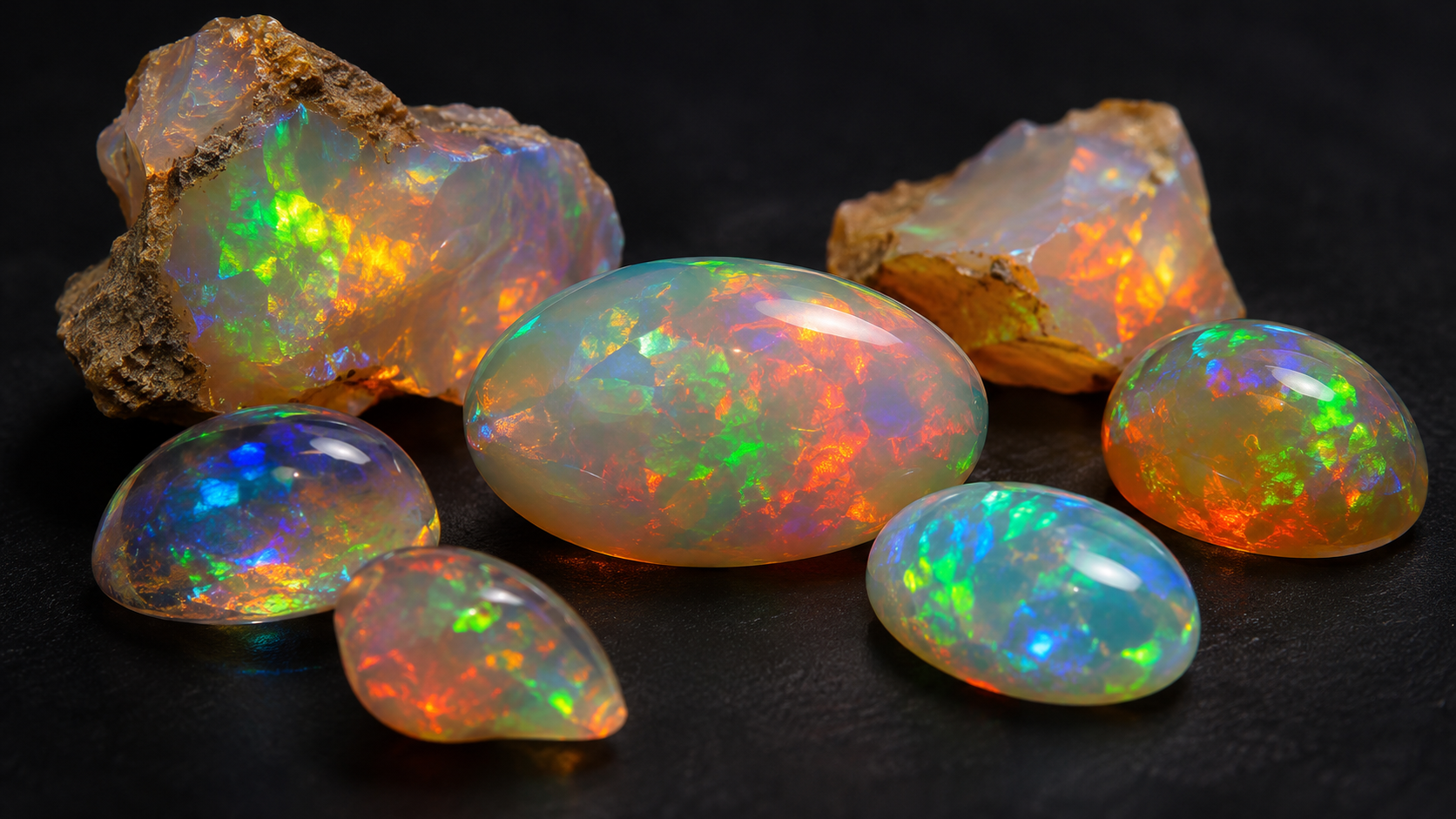
Ethiopia became a significant source of precious opal after white play-of-color material was discovered near Wegel Tena in the Wollo region in 2008. Gemological field studies describe a range of white, crystal, brown and darker material, while other Ethiopian deposits have their own histories. GIA's expedition reporting also documents international processing and trading links, including Jaipur. Those observations establish a real gemological and commercial history; they should not be mistaken for a current production or export-volume estimate. S1 S7
For buyers searching 'Ethiopian opal wholesale,' 'Welo opal rough,' or 'Wollo opal exporters,' the commercial opportunity is variety: parcels can serve stone cutters looking for rough material, jewelry makers buying finished cabochons, or dealers selecting individual stones. The challenge is variability. A compelling photograph of one specimen does not establish the quality, treatment history or recoverable yield of an entire lot.
Welo and Wollo are alternate trade spellings associated with Ethiopian opal; the location description alone does not prove mine origin. When origin matters to price or customer disclosure, ask what records support the claimed sourcing location. GIA has documented the Ethiopian sources and properties through field and laboratory research. S1 S15
What wholesale buyers can actually source
Rough Ethiopian opal for lapidaries
A rough opal parcel is material that still requires cutting and polishing. It may be attractive to lapidaries that can assess rough, tolerate breakage risk and optimize finished-stone yield. A rough quote should identify whether pieces are individually selected or mixed-grade, whether matrix is included, and whether the weight is dry, wet or otherwise conditioned. Ask for representative views of all sides and inspect a sample from the offered lot. Do not infer final gem yield from gross rough weight.
Polished Ethiopian opal cabochons
Cabochons are shaped, polished gemstones often used in rings, pendants and earrings. For repeatable jewelry production, specify millimeter dimensions, shape, dome height, tolerance, polish, condition and whether matched pairs are needed. GIA notes that cut, symmetry, color display and clarity affect an opal's appearance; a seller's blanket 'AAA' label is not an internationally uniform laboratory grade. S2 S3
Crystal, white, dark-bodycolor and mixed parcels

Descriptions such as white opal, crystal opal and dark-bodycolor opal refer to different visual appearances, but bodycolor is not a treatment certificate. Buyers should request both face-up and transmitted-light imagery when helpful, then verify whether darker appearance is natural or enhanced. Mixed lots should specify the grade distribution and whether the images show the entire lot or selected highlights.
How opal quality should be evaluated before you pay

GIA's published opal assessment framework prioritizes play-of-color, bodycolor, pattern, clarity and cutting. Brightness, the area that displays color, the colors visible at different angles and the presence of cracks or 'dead spots' matter to perceived quality. Buyers should evaluate multiple views under disclosed lighting, not rely on a heavily edited hero image. S2
- Play-of-color: request face-up and angled footage in consistent, neutral lighting; ask if the video represents the exact stones offered.
- Bodycolor and transparency: record whether the material is white, crystal, brown or dark; verify any claimed natural dark bodycolor.
- Pattern and coverage: note where color flashes appear and whether large areas lack color.
- Clarity and condition: inspect chips, internal fractures, crazing, pits, unstable matrix and visible repairs.
- Cutting: specify shape, dome, weight, symmetry, polish and matching requirements for finished stones.
- Lot consistency: request a parcel inventory or grade allocation rather than judging only the best few examples.
- Treatment: obtain a written statement covering dye, smoke/darkening, impregnation, coatings, composites and unknown history.
For expensive or disputed material, agree in advance on an independent gemological laboratory examination. Ask what the report actually establishes. A gem identification report may assess natural versus laboratory-grown material and detectable treatments; it does not automatically guarantee mining origin, commercial grade or future physical stability.
Hydrophane opal: the sourcing risk buyers must understand
Much Ethiopian Wollo opal is hydrophane: its porosity permits water absorption. The effect can change apparent transparency, play-of-color or weight while the stone takes in or releases moisture. It can also create durability concerns in susceptible specimens. Not every Ethiopian opal behaves identically, and a water-absorption property alone does not prove a stone has been dyed. GIA's laboratory and field publications describe variation between materials and caution about cracking. S1 S4 S5
A buyer should therefore ask whether the stones have been stored or photographed wet, how long they were conditioned before weighing and shooting, whether the exact parcel shows crazing, and how the supplier handles stability complaints. The seller's answer is useful evidence of transparency, but is not a substitute for independent testing. Do not recommend immersing stock to 'prove authenticity'; GIA describes risks associated with immersion of some hydrophane opals.
Treatment disclosure matters as much as color. Gemological studies demonstrate that porous opal may be modified through dyeing or impregnation, which can change appearance and identification requirements. A dark-looking opal is not automatically natural black opal. Record every disclosed treatment in the quote, sample reference and invoice, and use a qualified laboratory when a treatment distinction is commercially material. S5 S15
How to find reliable Welo opal exporters in Ethiopia
Start with a real exporter discovery process. Gizye's Ethiopian Minerals Exporters directory provides business profiles in a broad minerals category. A minerals category listing is not proof that a business stocks Ethiopian opal or holds the right authorization for a particular gemstone export. Open relevant profiles, check the license and activation indicators displayed, and ask the business to confirm its opal-specific activity, inventory and export readiness. S12 S14
A seven-point supplier due-diligence checklist
- Legal identity: match the quotation, company name, trade registration and bank beneficiary; ask about any agent or intermediary.
- Activity and authorization: confirm current export and mineral/gemstone activity permissions relevant to this transaction with the exporter and competent authority.
- Product expertise: ask for exact parcel descriptions, recent inventory and knowledge of hydrophane stability and treatments.
- Evidence quality: require lot-specific imagery, weight and dimensions, not recycled catalogue photos.
- Independent inspection: agree sampling, laboratory testing and acceptance criteria before a large order.
- Export readiness: request the expected documentary route, banking process and shipping method before payment.
- Communication and claims: check responsiveness, written treatment disclosures, complaint procedures and contract terms.
Ethiopia's Ministry of Mines has official information on gemstones and licensing, but the precise rules applicable to a particular mineral-exporter transaction should be confirmed from current authoritative guidance rather than inferred from an old blog post. Gizye's trust indicators support initial screening, not a guarantee of stone authenticity, delivery or commercial performance. S8 S14
Wholesale Ethiopian opal prices: how to compare genuine quotations

Searches for 'Ethiopian opal price per carat' are common, but an unsupported universal 2026 wholesale rate would mislead a buyer. Rough parcels, selected rough, finished cabochons and premium single stones cannot be priced sensibly without grade, treatment, condition, cut and quantity. Prices also depend on the quotation date, currency, supplier terms and market channel. This guide intentionally publishes no invented current price bands.
Request these fields in every quotation
- Exact material: Ethiopian Welo/Wollo opal, rough or polished, natural and treatment status.
- Quantity: number of stones and total carats or grams; define units. One metric carat equals 0.2 gram.
- Selection: whether the price covers a photographed exact parcel, selected grades or a changing assortment.
- Quality: visual grade criteria, size distribution, defect tolerance and accepted laboratory evidence.
- Price: currency, unit basis (per carat, per gram or per parcel), validity date and quantity breaks.
- Delivery: location, Incoterm and version, insured shipping responsibility and estimated dispatch date.
- Inspection: sample approval, independent testing, documentation and remedy for nonconforming material.
- Payment: authorized beneficiary, bank and agreed instrument, with no undocumented changes after acceptance.
A $/carat quote on polished gems is not interchangeable with a $/gram quote on rough. Even within the same unit, expected yield, breakage and treatment disclosure can dominate the economics. Compare landed usable cost, not only the headline unit price: material price plus inspection, laboratory work, freight, insurance, destination charges and the losses anticipated by the buyer's own cutting operation.
Sample order before a bulk opal purchase
For a new supplier, consider agreeing a small representative sample before committing to volume. The purpose is not to find the single best stone; it is to test whether the supplier's grading, photography, paperwork, packaging and communication match the proposed production order. Choose an appropriate sample size for the intended use and the parcel's value. The specific sample size is a commercial decision, not a universal gemstone standard.
- Ask the supplier to identify the sample as coming from a defined parcel or grade.
- Record weight, dimensions, condition, treatment declaration and image references before dispatch.
- For material that warrants it, obtain independent identification or treatment assessment.
- Have a qualified lapidary assess representative rough for cutting suitability and defects.
- Agree the acceptance standard and replacement/refund terms in writing before the bulk order.
- Retain sample and inspection records to compare against the eventual shipment.
Wholesale purchasing strategies by buyer type
For gemstone distributors and retail wholesalers
Prioritize repeatable commercial descriptions over a one-off showpiece. A reseller needs an inventory system in which the supplier's parcel code, photographs, weight, treatment status, cost basis and resale description stay connected. Request a defined grade distribution and do not market the top-grade sample as representative of mixed-grade stock. If the next order may differ, describe the conditions that trigger new sample approval. A distributor can also ask for a clear policy on breakage discovered when parcels are opened, because a low unit price does not compensate for frequent unsellable stones.
For jewelry manufacturers and designers
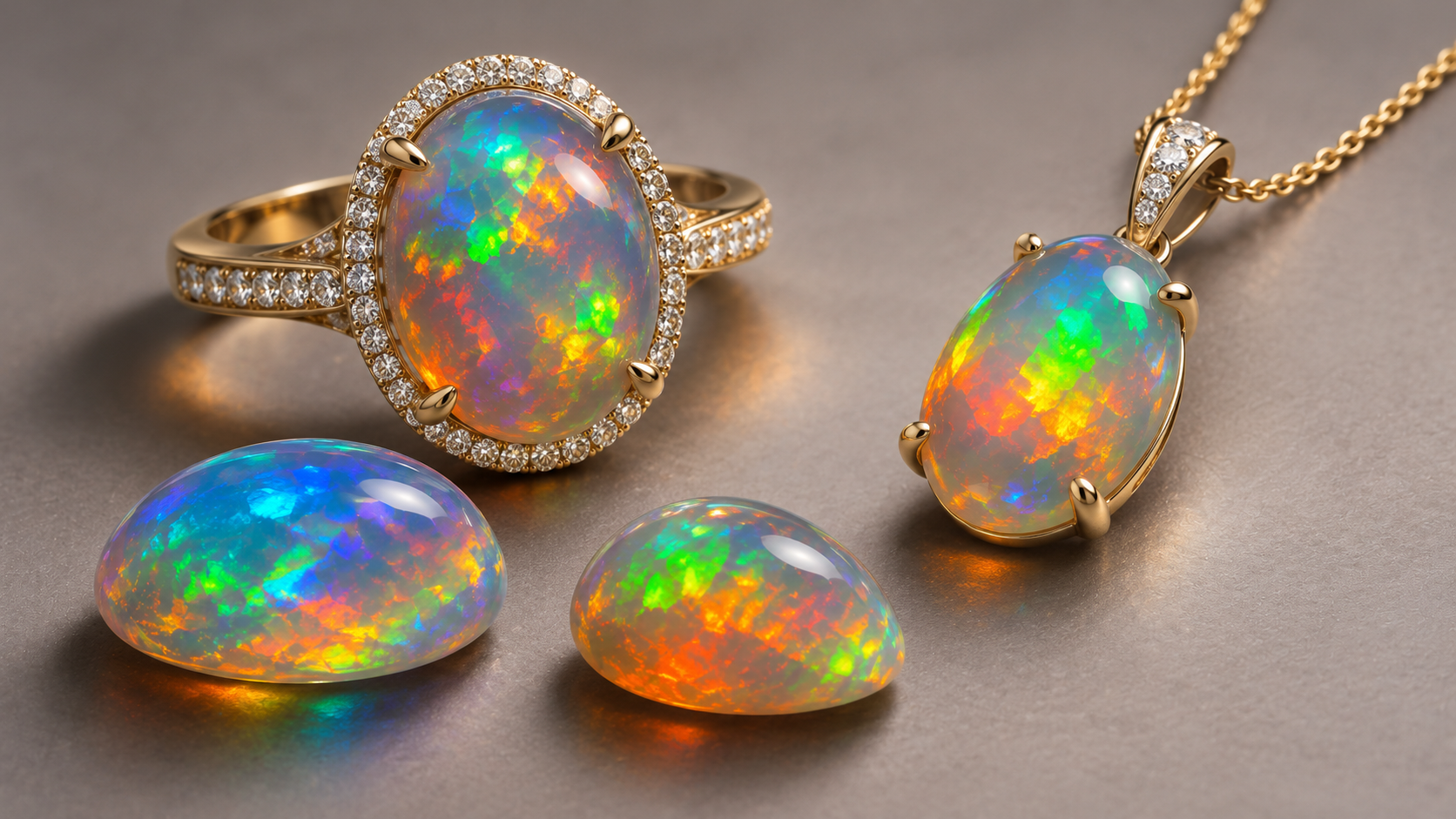
Consistency of calibrated dimensions, matching color display and stable finished condition often matter more than maximum rough weight. Provide drawings or size tolerances for each setting. Ask whether cabochons can be grouped into matched pairs, whether the backs are flat enough for the intended mounting and how the supplier grades surface cracks and edge chips. Do not treat a matching size specification as a guarantee that two opals will look identical: play-of-color can vary with angle and lighting. Include a clear procedure for rejecting visibly mismatched stones before they enter production.
For lapidaries importing rough material
The purchasing calculation should begin with usable output, not with total rough grams. A lapidary should account for matrix removal, inclusions, pre-existing fractures, desired finished shapes and the risk that a stone changes condition during cutting. Ask for photographs of all surfaces on material selected for cutting, confirm whether the recorded weight reflects a wet condition, and set the quantity of test rough appropriate for the planned production method. The first sample order should answer whether the seller's rough descriptions reliably predict the kind of finished goods the buyer needs.
Put measurable acceptance criteria into the purchase contract
A strong gemstone contract is built around observable properties. Define the product by lot identifier, exact material description, total units and tolerances; attach the approved video or image set; and document which characteristics justify rejection. A contract can state, for example, that all treatments known to the seller must be disclosed, that chipped or crazed pieces are excluded from a particular grade, and that arrival weights must be reconciled to the packing list. Those are negotiable commercial criteria rather than claims about a universal industry standard. Let the contract also name the independent examiner if the parties disagree over identification or treatment.
Agree when inspection takes place and who bears risk at each stage. A buyer purchasing a small sample may accept a simpler process than a company booking a large shipment of selected finished opal. Whatever the size, the contract should address parcel substitution, shipping damage, incorrect disclosure, short quantities and the process for returning or crediting nonconforming goods. Avoid vague promises such as 'premium quality guaranteed' unless premium has a shared written meaning. Clear terms are what turn online opal sourcing into a repeatable business process.
Packaging and shipment: protect the lot and the paper trail
Opal can be vulnerable to scratching, impact and rapid environmental change; GIA documents its modest hardness and potential for heat- or temperature-related fracturing. Use packaging appropriate to fragile stones, with individual separation for finished gems, tamper-evident identification for high-value lots and a written packing inventory. Ask the shipper how it addresses loss, damage, insurance and customs examination. Avoid prescribing untested moisture treatments during shipment. S6
A commercial quote should establish the delivery point and the chosen Incoterm; gemstone parcels are often small and high in value, so handling and insurance deserve particular attention. The supplier and buyer should also agree how parcel identifiers, sealing photographs and weights will connect the approved sample, invoice, export declaration and arrival inspection.
Ethiopian opal export documents and payment controls
The exact export-document package depends on the exporter, commodity classification, export regime, transport route, destination and rules in force at shipment. Ethiopia's Customs Traders Interactive Guide is designed to identify transaction-specific documentary requirements. The National Bank of Ethiopia's FXD/01/2024 directive sets out an export-banking framework, but it is a dated primary source: exporters and their banks must confirm any amendments or more specific current requirements before relying on it. S9 S10 S11
- Confirm the exporting entity, valid permissions for the relevant gemstone activity and the precise product description.
- Request a pro forma invoice and, at shipment, the commercial invoice and detailed packing list.
- Ask which customs export declaration, origin documentation and mineral-specific clearances are required for the actual shipment.
- Confirm the appropriate HS classification with the exporter, freight agent and destination customs professional; do not classify every opal parcel from a generic article.
- Confirm the bank-approved payment path, any relevant permits and the beneficiary before transferring funds.
- Agree transport documentation, insurance and destination import requirements with the freight forwarder and buyer.
For broader context, read Gizye's Ethiopia export documentation guide and HS-code guide. Neither replaces formal advice from the responsible customs authority. No article can certify a supplier's current license or determine the requirements for every destination.
How to write an RFQ that gets meaningful opal offers
A vague message such as 'I want cheap Ethiopian opal' invites incompatible offers. A professional request for quotation (RFQ) gives exporters enough information to determine whether they can supply an actual order. Provide the fields below and ask for a quoted exact parcel or an explicitly defined repeatable grade.
- Product: Ethiopian Welo/Wollo precious opal, rough or polished; natural untreated only or disclose acceptable treatments.
- Use case: lapidary cutting, calibrated jewelry production, matching pairs, wholesale resale or selected individual stones.
- Quantity: total carats or grams, pieces, desired monthly replenishment if relevant, and target lot size.
- Visual specifications: bodycolor, play-of-color preference, transparency, dimensions, condition and maximum defect tolerance.
- Evidence: exact-lot daylight/video images, lot identifier, weight/size breakdown and written treatment disclosure.
- Inspection: sample requirement, independent lab report if necessary and acceptance/testing procedure.
- Quotation: currency, per-unit and per-parcel totals, validity, Incoterm, lead time and insurance arrangement.
- Destination: destination country and city or airport, preferred shipping window and customs requirements.
- Payment: preferred approved payment instrument and authorized company-bank details.
- Supplier evidence: company name, current applicable export authorization and how the stones were obtained.
Copy-ready example: 'We are a jewelry manufacturer seeking 250 carats of polished Ethiopian Welo opal cabochons for trial production, with an interest in repeat orders if the sample is accepted. Please quote exact-lot or defined-grade stock, identify shapes and millimeter size ranges, disclose all known treatments, provide daylight photos/video and a weight breakdown, and state the Incoterm, destination delivery options, inspection process and shipping documents. We will agree quality standards and payment terms before confirmation.' Adjust the quantity and product to your real demand; this is an example, not a reported market minimum.
Red flags when evaluating an Ethiopian opal supplier
- The supplier claims every dark opal is naturally black but refuses written treatment disclosure.
- Only one edited image is supplied for a supposedly large wholesale lot.
- The quoted unit changes between carats, grams and parcels without an explanation.
- Claims of a universal guaranteed cutting yield or guaranteed opal stability are made without evidence.
- The invoice identity or payment beneficiary differs from the contracting business without documentation.
- The supplier discourages sampling, independent inspection or a written nonconformity remedy.
- The seller invokes 'government approval' or 'Gizye verification' as a guarantee of gemstone grade or delivery.
- An offer relies on a precise import duty, export license rule or price floor without identifying the relevant date, jurisdiction or authority.
These are due-diligence signals, not allegations against any listed company. Ask for clarification and evidence before reaching a commercial decision. A sound B2B sourcing relationship depends on disclosures both parties can document and verify.
FAQ: buying and importing Ethiopian opal wholesale
Where can I find Ethiopian opal exporters?
Start with Gizye’s Ethiopian Minerals directory and contact businesses that confirm they actually deal in opal. Check the relevant license information and request lot-specific evidence. The minerals directory is broader than opal alone.
Is Welo opal the same as Wollo opal?
Welo and Wollo are alternate spellings widely used in trade descriptions of opal associated with Ethiopia’s Wollo area. A seller’s label is not proof of exact mine origin; ask for traceable records when origin is contractually important.
Can I buy rough Ethiopian opal in bulk?
Yes, rough opal is a recognized trading form, but offers vary by lot. Ask for weights, sizes, matrix content, condition, treatment disclosure and a representative sample. Do not assume all rough produces a predictable amount of polished material.
What is the wholesale price of Ethiopian opal per carat in 2026?
There is no defensible single price for all material. Compare dated, like-for-like quotes by form, quality, condition, treatment status and order size. This article does not invent price ranges or endorse marketplace quotes it has not examined.
Is Ethiopian opal always hydrophane?
No. A large share of Wollo opal is hydrophane, but properties vary across stones and deposits. GIA documents the water-absorption behavior and associated stability considerations. S1 S4
How can a buyer identify treated Ethiopian opal?
Require seller disclosure and, for important purchases, obtain independent gemological testing. Dye or impregnation may be detectable with appropriate instruments; appearance alone is not a reliable treatment certificate. S5
Can I trust a supplier because it appears on Gizye?
A Gizye profile helps you review available business and license information, but does not guarantee opal authenticity, stock, fulfillment or payment safety. Conduct product-level and transaction-level due diligence. S14
What documents do I need to import Ethiopian opal?
Requirements depend on the product classification, export permissions, destination and shipping procedure. Request the invoice, packing list, appropriate origin and customs evidence, and any gemstone-specific authorizations required for your actual transaction. Verify current rules with customs and banking authorities. S9 S11
Should I import rough opal or polished cabochons?
Buy rough if you can evaluate and cut it and can bear yield and stability risks. Buy polished stones when consistent appearance, size and ready-to-set inventory matter more. Compare total usable cost after cutting, inspection, shipping and losses.
How should I store and ship hydrophane opal?
Use gentle, protective packaging and avoid extreme heat or sudden temperature changes. Do not assume that keeping every opal immersed in water improves stability. Handle cleaning and moisture decisions according to qualified gemological advice and the particular material. S6
Can I request offers from Ethiopian exporters through Gizye?
Yes. You can post a sourcing Requirement with your opal specifications. Gizye reviews Requirements before they become visible to eligible exporters; receiving offers is not guaranteed.
Your next step: discover, compare and request opal quotes
The strongest Ethiopian opal sourcing process combines a precise RFQ, an exporter with the relevant authorization, a representative sample and independent evidence where needed. Start by exploring Ethiopian mineral exporters and asking which businesses can supply the specific Welo opal material you need. If you would rather describe your requirement once, post an Ethiopian opal sourcing Requirement for review and potential offers from eligible exporters. Gizye helps with discovery and communication; it does not act as a gemstone laboratory, payment guarantor or trade broker.
Sources and further reading
The source references below distinguish gemological research from Ethiopian official guidance and Gizye marketplace information. Laboratory research describes the studied material and should not be read as a certificate for the exact lot you buy. Dated regulatory material must be checked against current rules before shipment.
S1. GIA Gems & Gemology — Land of Origins: A Gemological Expedition to Ethiopia (2019) — https://www.gia.edu/gems-gemology/spring-2019-land-of-origins-gemological-expedition-ethiopia
S2. GIA — Opal Quality Factors — https://www.gia.edu/opal-quality-factor
S3. GIA — Opal Buyer’s Guide — https://www.gia.edu/opal/buyers-guide
S4. GIA Gems & Gemology — A Useful Technique to Confirm the Hydrophane Nature of Opal (2013) — https://www.gia.edu/gems-gemology/fa13-ln-technique-hydrophane-opal
S5. GIA Gems & Gemology — Hydrophane Opal Treatment (2016) — https://www.gia.edu/gems-gemology/spring-2016-labnotes-hydrophane-opal-treatment
S6. GIA — Opal Care and Cleaning Guide — https://www.gia.edu/opal-care-cleaning
S7. GIA Gems & Gemology — Play-of-Color Opal from Wegel Tena, Wollo Province, Ethiopia (2010) — https://www.gia.edu/gems-gemology/summer-2010-opal-ethiopia-rondeau
S8. Ethiopian Ministry of Mines — Gemstones — https://www.mom.gov.et/en/mining/gemstones
S9. Ethiopian Customs — Traders Interactive Guide — https://customs.erca.gov.et/traders-guide/?lang=en
S10. National Bank of Ethiopia — Foreign Exchange Directive No. FXD/01/2024 (historical primary text; check amendments) — https://nbe.gov.et/wp-content/uploads/2024/07/FXD012024-FOREIGN-EXCHANGE-.pdf
S11. Gizye — Ethiopia Export Documentation: What International Buyers Should Expect in 2026 — https://gizye.com/insights/ethiopia-export-documentation-buyers-guide
S12. Gizye — Ethiopian Minerals Exporters — https://gizye.com/exporters/minerals
S13. Gizye — Post a Requirement — https://gizye.com/post-requirement
S14. Gizye — Support Center — https://gizye.com/support
S15. GIA Gems & Gemology — New Deposit of Black Opal from Ethiopia (2014) — https://www.gia.edu/gems-gemology/winter-2014-gemnews-new-deposit-black-opal-from-ethiopia
S17. Gizye — HS Codes for Ethiopian Exporters — https://gizye.com/insights/hs-codes-ethiopian-exporters-guide