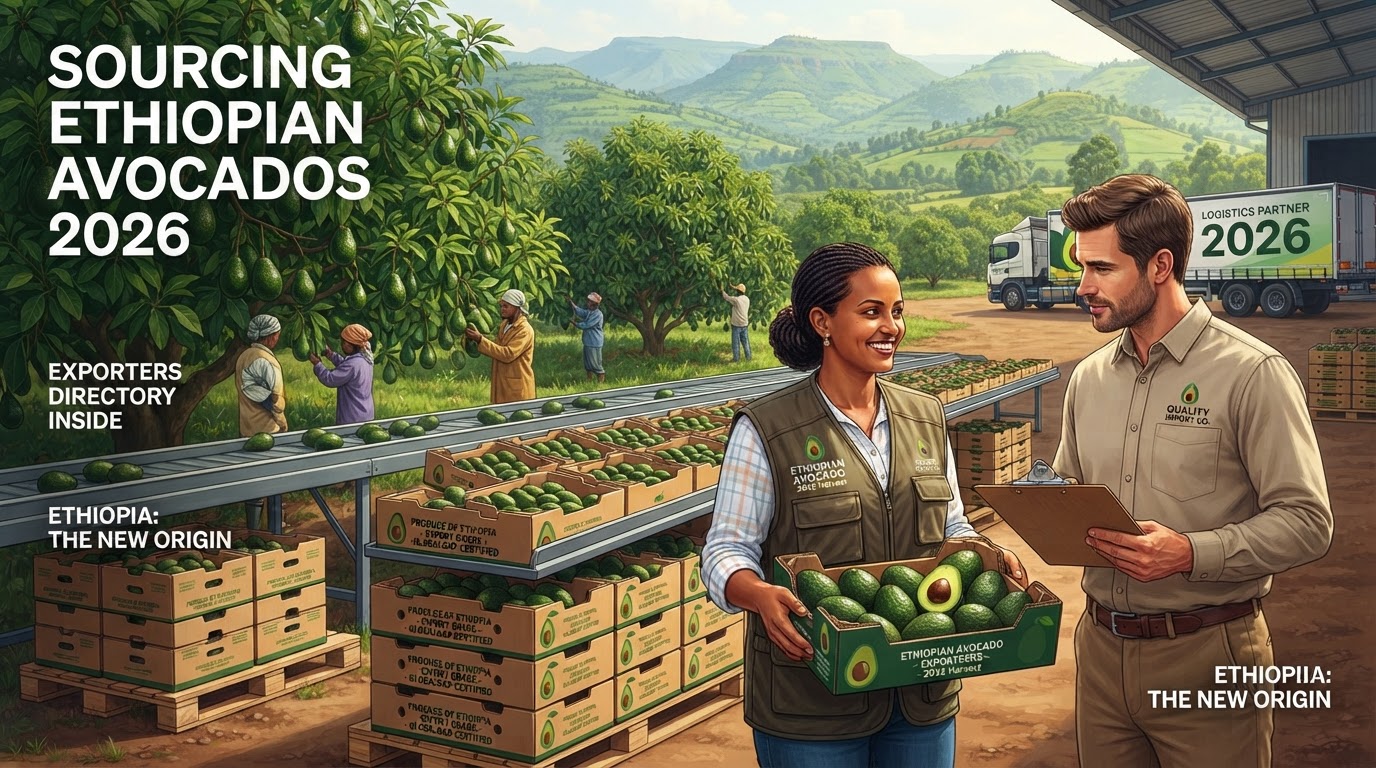
Ethiopia Is Not Just a Coffee Origin It Is an Entire Sourcing Market
For coffee buyers, Ethiopia occupies a distinctive position. It is one of the world's major Arabica producers, home to an enormous smallholder production base, internationally recognized coffee-growing areas and a broad range of washed, natural and specialty coffees.
The USDA Ethiopia Coffee Annual estimates production for marketing year 2025/26 at approximately 11.56 million 60-kilogram bags and forecasts production to rise to 12.1 million bags in 2026/27. Around 5.9 million farmers participate in coffee production, with smallholders accounting for about 90% of national output.
USDA data also shows Ethiopia exported about 7.43 million 60-kilogram bags in marketing year 2024/25, worth approximately $2.89 billion in the underlying trade dataset.
For international buyers, this means Ethiopia is not simply an interesting specialty origin. It is a large, increasingly connected export market with thousands of businesses involved in coffee trade.
Quick Answer: How Do You Source Coffee From Ethiopia?
- Define the coffee you want to buy.
- Choose the origin or cup profile you are targeting.
- Decide between washed, natural or another processing requirement.
- Identify Ethiopian businesses associated with coffee export activities.
- Build a shortlist of relevant exporters.
- Send a detailed sourcing inquiry.
- Request samples and specifications.
- Cup and evaluate the coffee.
- Compare quotations on the same commercial basis.
- Agree quality, quantity, packaging and Incoterm.
- Confirm documentation and shipping requirements.
- Confirm company and payment information.
- Place the commercial order.
The key is to avoid jumping directly from “I found an exporter” to “What is your cheapest price?” Coffee sourcing works much better when product requirements come first.
Start With Verified Ethiopian Coffee Exporters
A buyer should ideally begin with businesses whose trade activities are actually connected to coffee.
Open internet searches often mix together coffee exporters, coffee shops, roasters, domestic wholesalers, brokers, general traders, agricultural businesses and companies with old or incomplete listings.
Gizye was built to make this starting point easier.
The dedicated Ethiopian Coffee Exporters directory on Gizye lets buyers explore businesses associated with coffee trade activity inside a coffee-specific marketplace rather than reconstructing the exporter market from scattered search results.
Gizye uses registry-backed Ethiopian business and trade information to help buyers evaluate exporters before making contact.
Browse Ethiopian Coffee Exporters on Gizye.
Understand What “Ethiopian Coffee” Actually Means
One of the biggest mistakes new buyers make is treating Ethiopian coffee as a single product. It is not.
Coffee grown in different areas can have very different cup profiles, altitudes, varieties, processing traditions, availability, quality characteristics and commercial positioning.
A sourcing inquiry for simply “Ethiopian Arabica” is therefore very broad. A stronger inquiry identifies the type of Ethiopian coffee the buyer is interested in.
Major Ethiopian Coffee-Producing Areas Buyers Should Know
Coffee is produced across several Ethiopian regions.
USDA data based on Ethiopian Coffee and Tea Authority information shows that, over the most recent three-year period reported, Oromia accounted for about 59.5% of national production, followed by Southwest Ethiopia at 13.7%, Sidama at 12.9% and South Ethiopia at 7.1%. Together, those four regions represented roughly 93% of production.
Yirgacheffe
Yirgacheffe is one of Ethiopia's best-known specialty coffee names. Buyers commonly associate coffees from the area with delicate and expressive profiles that may include floral, citrus, tea-like or fruit characteristics depending on lot, processing and producer.
A buyer should still evaluate the actual sample rather than buying only the regional name.
Sidama
Sidama produces a wide variety of coffees across numerous districts and elevations. Washed and natural coffees are both available, and profiles can range considerably by location and processing.
USDA reported particularly strong quality in the current Sidama supply, noting that regional ECTA information classified approximately 97% of coffee supplied from Sidama to the central market during the referenced 2025/26 season as Grade 1 or Grade 2.
Guji
Guji has become one of the most internationally recognizable Ethiopian specialty origins. Buyers frequently source both washed and natural Guji coffees, particularly for specialty roasting programs where traceability, processing and lot differentiation matter.
Jimma
Jimma is an important western coffee-producing area and contributes substantial commercial and specialty volumes.
USDA's 2026 report notes that western and southwestern areas including Jimma, Limmu, Kaffa, Bench Maji and Sheka experienced relatively strong production conditions during 2025/26 compared with some southern areas.
Limmu
Limmu is well established in Ethiopia's washed-coffee trade and can be relevant to buyers seeking dependable export lots alongside more differentiated specialty offerings.
Kaffa and Southwest Ethiopia
Southwestern Ethiopia forms an important part of the country's production base. For buyers seeking broader origin exploration, these areas can provide interesting opportunities outside the most internationally marketed names.
Harrar and Eastern Ethiopia
Harrar is historically associated with natural-process Ethiopian coffees and remains an internationally recognized origin name. As with every origin, buyers should source according to actual lot characteristics rather than assuming all coffee carrying the regional name will taste identical.
Origin Is Important But the Sample Is More Important
Origin names are useful sourcing filters. They are not quality guarantees.
Two coffees from the same producing area can differ because of altitude, harvest timing, cherry selection, cultivar mix, washing-station practices, fermentation, drying, storage, sorting and lot preparation.
Washed vs Natural Ethiopian Coffee
Washed Ethiopian Coffee
In washed processing, coffee cherries are depulped and the seeds are processed through controlled fermentation or demucilaging, washing and drying.
Washed Ethiopian coffees are often sought by buyers wanting clarity and defined acidity. Depending on origin and lot, profiles may emphasize florals, citrus, stone fruit, tea-like qualities and clean sweetness.
Natural Ethiopian Coffee
Natural coffee is dried with the cherry surrounding the seed before the dried fruit is removed.
Natural Ethiopian coffees can produce more intense fruit-forward profiles. Depending on the lot, buyers may encounter berry, tropical fruit, dried fruit, chocolate, floral sweetness and fuller body.
Processing quality is important. A well-prepared natural coffee can be exceptional, while poor drying or cherry selection can produce unwanted fermentation or inconsistency.
Washed Coffee Availability Deserves Attention in 2026
USDA reported that the high price of fresh coffee cherries during the 2025/26 harvest encouraged some farmers to dry cherries themselves rather than sell them to washing stations. Washing stations also faced higher working-capital requirements.
The result was tighter washed-coffee supply and increased natural processing in some producing areas.
Commodity Coffee and Specialty Coffee Require Different Buying Approaches
Commercial-Volume Buyers May Prioritize
- Repeatable cup profile
- Price
- Volume availability
- Defect tolerance
- Screen preparation
- Consistency across shipments
- Predictable logistics
Specialty Buyers May Prioritize
- Traceability
- Specific washing station or producer
- Precise origin
- Altitude
- Processing
- Harvest
- Cupping score
- Lot separation
- Detailed sensory characteristics
Neither approach is inherently better. The right sourcing strategy depends on the buyer's market.
Traceability in Ethiopian Coffee Has Been Expanding
Ethiopia's coffee supply chain has changed considerably.
Current rules allow exporters, cooperatives and qualifying producers to establish more direct buying and export relationships.
USDA's 2026 Coffee Annual notes that coffee can be purchased directly from farmers or washing stations and exported without necessarily passing through the traditional ECX auction route, supporting farm-level traceability that is particularly important to specialty buyers.
The buyer should ask the exporter what traceability is available for the specific lot being offered.
What Should You Put in an Ethiopian Coffee RFQ?
A detailed request for quotation dramatically improves supplier responses.
- Product: Green Ethiopian Arabica coffee
- Origin: Guji / Sidama / Yirgacheffe or open to recommendation
- Processing: Washed
- Grade: Grade 1 or agreed equivalent requirement
- Quantity: 19.2 MT
- Packaging: 60 kg export bags with liner if available
- Destination: Hamburg, Germany
- Incoterm: FOB and CFR quotation requested
- Shipment period: November–December 2026
- Quality requirement: Sample approval before contract
- Additional information requested: Crop year, cup profile, moisture, traceability and certificate availability
Now the exporter understands what business opportunity is actually being offered.
What Information Should You Request From an Exporter?
- Coffee origin
- District or washing station where available
- Crop year
- Processing method
- Grade
- Altitude where traceable
- Cup description
- Moisture
- Defect information
- Screen information where relevant
- Available quantity
- Packaging
- Shipment period
- Export experience
- Sample availability
- Quotation validity
Specialty buyers may request additional traceability or lot-level information.
Always Evaluate the Coffee, Not Just the PDF
Specifications help narrow the search. Samples make the buying decision more concrete.
For meaningful coffee purchases, buyers should usually arrange sample evaluation before approving the final commercial lot.
- Green appearance
- Moisture
- Defects
- Roast behavior
- Fragrance and aroma
- Acidity
- Sweetness
- Body
- Flavor
- Aftertaste
- Uniformity
- Overall cup quality
The criteria should reflect your own buying program.
Ask What the Sample Represents
- Is this sample taken from an existing export lot?
- Is the full quantity already available?
- Will the contracted shipment come from the same lot or preparation?
- Is it a representative sample or an indicative sample?
These questions help prevent a common sourcing misunderstanding in which the buyer cups an excellent sample but the commercial shipment is prepared later from materially different coffee.
How Ethiopian Coffee Export Grades Fit Into Buying
Ethiopian coffee is commonly offered using grade classifications, but buyers should not treat the grade number as the complete purchasing specification.
Buyers should still evaluate the actual cup, defect preparation, processing, moisture, consistency, traceability and intended use.
The Ethiopian Commodity Exchange maintains coffee grading and quality infrastructure. Buyers can review additional market information through ECX.
What Is the HS Code for Ethiopian Green Coffee?
For most green, non-decaffeinated coffee, the international six-digit HS classification to investigate is 090111 — Coffee, not roasted, not decaffeinated.
Other classifications apply to decaffeinated and roasted coffee products.
The buyer should verify the applicable tariff classification in the destination country before import.
Ethiopian Coffee Pricing: Why Two Exporters Can Quote Very Different Prices
Two exporters may legitimately quote very different prices because their coffees differ in origin, grade, processing, quality, crop year, traceability, preparation, quantity, packaging, shipment timing and Incoterm.
USDA reports that the Ethiopian Coffee and Tea Authority administers a minimum export-price framework updated according to factors including international market conditions, exchange rates, grade, processing method and origin differentials.
Compare Quotations on the Same Incoterm
If one exporter quotes EXW, another FOB, and another CFR Hamburg, you do not have three comparable coffee prices. You have three different combinations of coffee and logistics responsibility.
- EXW
- FCA
- FOB
- CFR
- CIF
Always make sure you understand the agreed Incoterm and named location.
Ethiopia's Coffee Export Geography Is Changing
Ethiopian coffee has long-established buyers in Europe, North America and the Middle East.
In marketing year 2024/25, USDA data identified Saudi Arabia, Germany, China, Belgium and the United States among Ethiopia's major coffee destinations.
For importers, this means competition for desirable Ethiopian lots can come from a wider set of destinations than traditional European and U.S. specialty markets alone.
How Is Ethiopian Coffee Shipped?
Ethiopia is landlocked. Export coffee therefore normally requires an inland logistics leg before reaching an international seaport.
Djibouti plays a major role in Ethiopia's foreign trade corridor.
Depending on contract structure and exporter arrangements, coffee may move through exporter/warehouse → inland transport → Ethiopian logistics/customs process → Djibouti corridor → ocean shipment → buyer destination.
Air freight can also be relevant for samples and very small specialty consignments. For commercial container volumes, ocean freight is generally the more relevant mode.
Coffee Packaging Should Be Agreed Before Contract
- Bag size
- Material
- Protective liners
- Marks
- Lot identification
- Palletization if relevant
- Container configuration
Traditional jute export bags remain common, while higher-value or specialty buyers may request additional protective liners or other packaging arrangements.
Which Documents Should Coffee Buyers Expect?
- Pro forma invoice
- Commercial invoice
- Packing list
- Export/customs documentation
- Certificate of origin where required
- Phytosanitary or other relevant certificates where applicable
- Quality or inspection documentation where agreed
- Bill of lading or air waybill
The destination country's requirements should be established before shipment. The buyer and exporter should agree documentation at the same time they agree the coffee specification.
Destination Requirements Belong in the Sourcing Conversation
- Specific phytosanitary documentation
- Food-safety registration
- Importer registration
- Residue testing
- Labeling
- Sustainability or traceability data
- Additional certificates
For buyers importing into regulated markets, these requirements can materially affect which supplier is appropriate.
EU Coffee Buyers Should Consider Their Own Regulatory Obligations
European buyers should ensure they understand current EU requirements that apply to their company and coffee imports, including traceability and other due-diligence obligations where applicable.
The exporter can provide relevant origin and supply-chain information, but the importer remains responsible for understanding the rules applicable in its destination market.
How to Compare Ethiopian Coffee Exporters
- Licence and coffee activity
- Product fit
- Sample quality
- Volume
- Traceability
- Communication
- Documentation
- Shipment timing
- Commercial terms
Gizye helps buyers evaluate registry-backed trade information before making contact.
Why Gizye Is Particularly Useful for Coffee Buyers
Coffee is one of the largest sourcing categories on Gizye.
The Gizye Coffee Exporters directory gives buyers a dedicated place to review Ethiopian businesses associated with coffee trade and narrow their search before sending inquiries.
Instead of Google → random website → “Are you actually a coffee exporter?”, the buyer can start with Gizye Coffee Exporters → relevant supplier profiles → shortlist → direct inquiry.
Gizye focuses on exporter discovery, verification and direct buyer-seller connection rather than acting as a broker in the commercial transaction.
A Practical Coffee-Sourcing Workflow on Gizye
- Browse Ethiopian coffee exporters on Gizye.
- Review exporter profiles and trade activities.
- Shortlist several suppliers.
- Send a detailed inquiry.
- Request samples.
- Cup and compare.
- Compare commercial offers on the same basis.
- Agree the lot.
- Confirm documentation and shipping.
- Confirm payment details directly with the exporter.
Gizye currently focuses on exporter discovery, verification and buyer-seller connection rather than processing the underlying transaction.
Before sending payment, confirm that the exporter, invoice and beneficiary information are consistent with the company you are dealing with. If bank instructions change unexpectedly, confirm the change directly with the exporter using an established contact channel.
Example Buyer Inquiry
- Product: Ethiopian green Arabica coffee
- Origin preference: Guji or Sidama
- Process: Washed
- Quality: Grade 1, specialty quality
- Quantity: 320 bags / approximately one container
- Packaging: 60 kg bags, protective liner preferred
- Destination: Hamburg, Germany
- Quotation requested: FOB and CFR Hamburg
- Shipment: November–December 2026
- Please provide: crop year, exact origin, available quantity, cup profile, moisture, sample availability, traceability information and quotation validity
That inquiry is far more likely to generate a commercially useful response than “Send coffee price.”
When Is the Best Time to Buy Ethiopian Coffee?
There is no single buying month appropriate for every origin. Harvest timing varies by producing area, altitude and season.
Buyers planning significant programs should discuss current crop availability, harvest timing, shipment window, warehouse stocks, upcoming crop and sample availability with exporters rather than relying solely on a generic national calendar.
Should You Buy Directly From a Producer or Through an Exporter?
Both models can be valid. The appropriate model depends on required quantity, traceability, producer export eligibility, quality program, logistics capacity and buyer experience.
Ethiopia's evolving coffee regulations have expanded direct market access for producers and cooperatives, while conventional exporters remain important to aggregation, preparation, financing, quality management and logistics.
For many international buyers — particularly those entering Ethiopia for the first time — an experienced licensed exporter can simplify the commercial process considerably.
Frequently Asked Questions
Where can I find Ethiopian coffee exporters?
Gizye maintains a dedicated marketplace directory for Ethiopian businesses associated with coffee export activities. Browse Ethiopian Coffee Exporters.
Is Ethiopia mainly an Arabica coffee producer?
Yes. Ethiopia is internationally associated primarily with Arabica production and remains a major source of green Arabica for both commercial and specialty markets.
How much coffee does Ethiopia export?
USDA reports approximately 7.43 million 60-kg bags exported during marketing year 2024/25. Export volumes vary by season.
What are the major Ethiopian coffee origins?
International buyers commonly encounter coffees associated with Sidama, Yirgacheffe, Guji, Jimma, Limmu, Kaffa, Harrar and Southwest Ethiopia.
Can I buy washed and natural coffee from Ethiopia?
Yes. Ethiopia exports both washed and natural coffees. Availability varies by area and season.
What is the HS code for Ethiopian green coffee?
At the international six-digit level, green non-decaffeinated coffee is generally classified under HS 090111. Destination-country tariff codes should still be verified before import.
Can I buy coffee directly from Ethiopian producers?
Ethiopia's coffee market reforms have expanded routes through which qualified producers, cooperatives and exporters can establish direct international relationships.
Does Ethiopian coffee have to go through ECX?
Not every coffee export is required to follow the traditional ECX auction route. Current rules allow several direct-sourcing and export pathways.
Can Gizye guarantee the coffee quality?
Gizye verifies and organizes exporter business information; it does not replace product sampling and quality evaluation. Buyers should approve the actual coffee according to their required specification.
Does Gizye handle payment?
Not currently. Gizye connects buyers directly with Ethiopian exporters. Commercial terms and payment arrangements are agreed between buyer and seller.
Ethiopia's Coffee Opportunity in 2026
- Enormous genetic diversity
- Well-established coffee culture
- Millions of producing households
- Globally recognized origins
- Specialty-quality potential
- Large commercial supply
- Expanding traceability
- A growing direct-export environment
- Increasing international demand
The best Ethiopian sourcing relationships are unlikely to come from repeatedly asking “Who has the cheapest coffee today?” They come from finding exporters whose coffee, quality, availability, communication and commercial capability match the buyer's actual program.
From Searching for Ethiopian Coffee to Building a Supply Relationship
A professional sourcing process develops step by step: define the coffee → find relevant Ethiopian exporters → review the businesses → send a detailed inquiry → receive specifications → request samples → cup the coffee → compare commercial offers → agree the lot → confirm documentation and logistics → place the order → evaluate performance → build the relationship.
That is how a coffee search becomes a supply chain.
Find Ethiopian Coffee Exporters on Gizye
Gizye gives international buyers a dedicated place to discover Ethiopian coffee exporters using registry-backed business and trade information.
Instead of beginning with an unstructured list of companies from across the internet, buyers can start inside the coffee sector and evaluate businesses before making contact.
Browse Ethiopian Coffee Exporters on Gizye.
Authoritative Resources
For current market context and coffee-sector data, buyers can consult the USDA Ethiopia Coffee Annual and Ethiopian Commodity Exchange.